Twice every 210 days, Bali enters one of its most sacred and vibrant ceremonial periods: Galungan and Kuningan.
More than a festival, it is a profound spiritual cycle marking the victory of dharma (virtue, cosmic order) over adharma (chaos, disorder), a cornerstone of Balinese Hindu philosophy.
In 2026, Galungan will be observed on June 17, followed by Kuningan on June 27, marking the sacred culmination of this ceremonial cycle.
The meaning of Galungan
Galungan commemorates the triumph of good over evil and celebrates the moment when ancestral spirits return to visit their earthly homes. According to Balinese belief, during this time the ancestral realm draws closer to the human world.
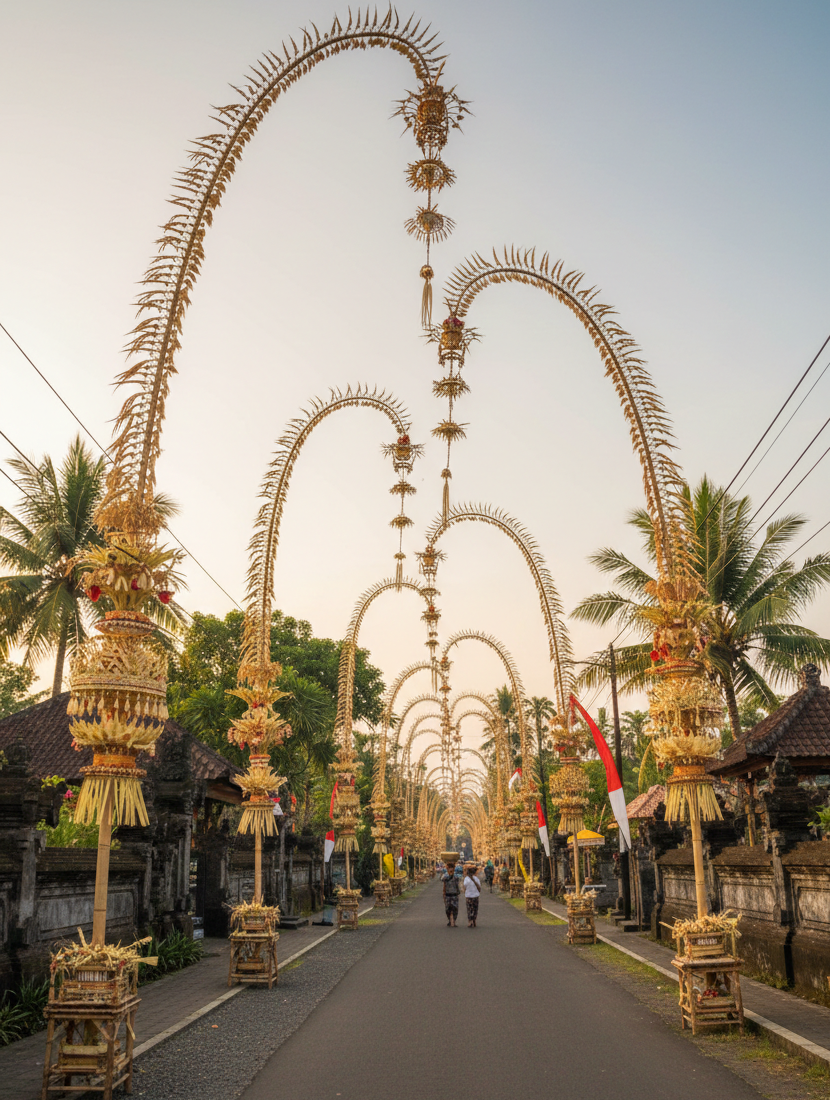
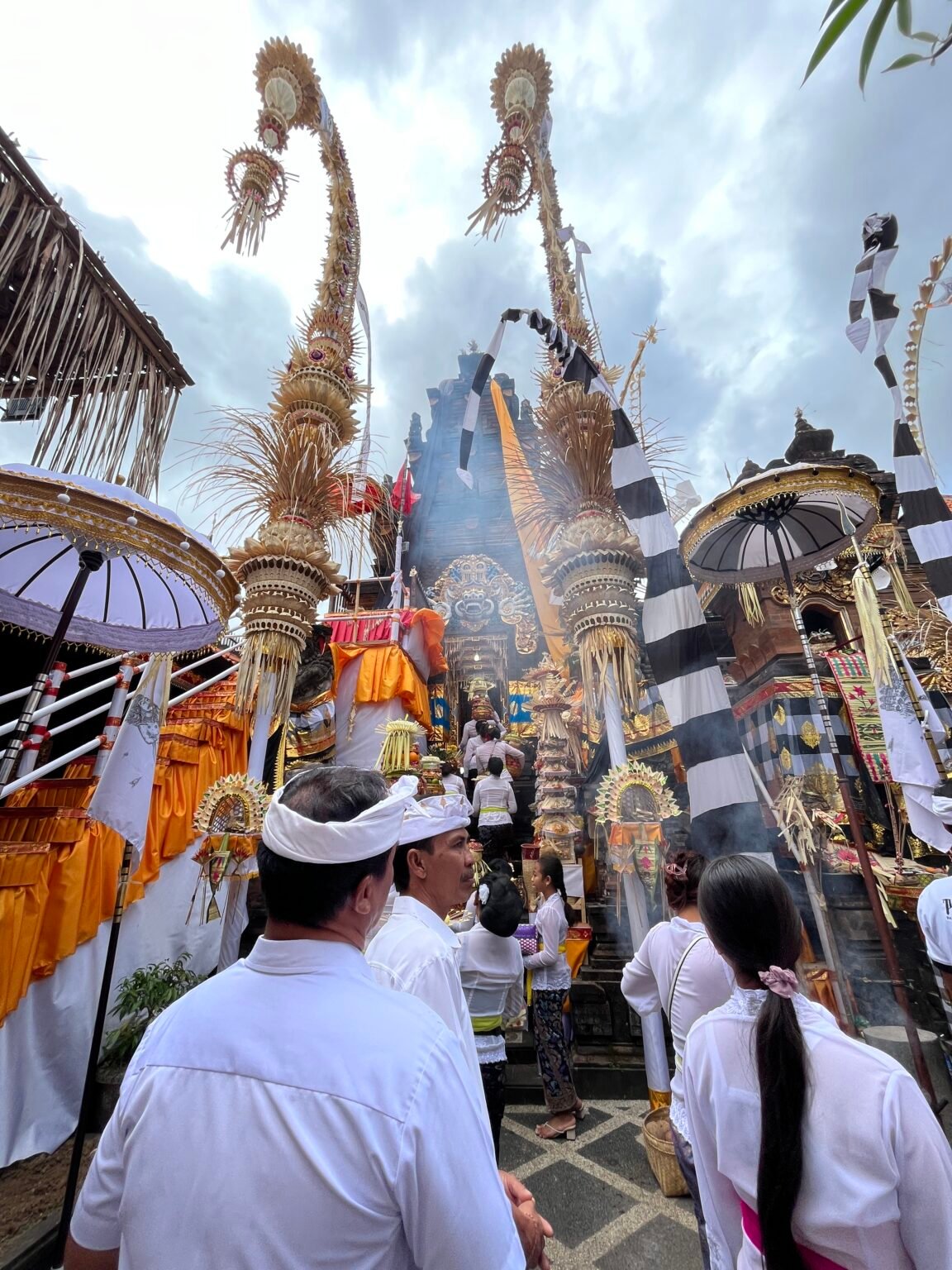
In the days leading up to Galungan, families prepare offerings, cook traditional dishes, and decorate their homes and temples. One of the most striking visual elements is the penjor — tall, gracefully curved bamboo poles adorned with coconut leaves, fruits, flowers, and symbolic ornaments. Lining the streets, they transform villages into ceremonial avenues of devotion and artistry.
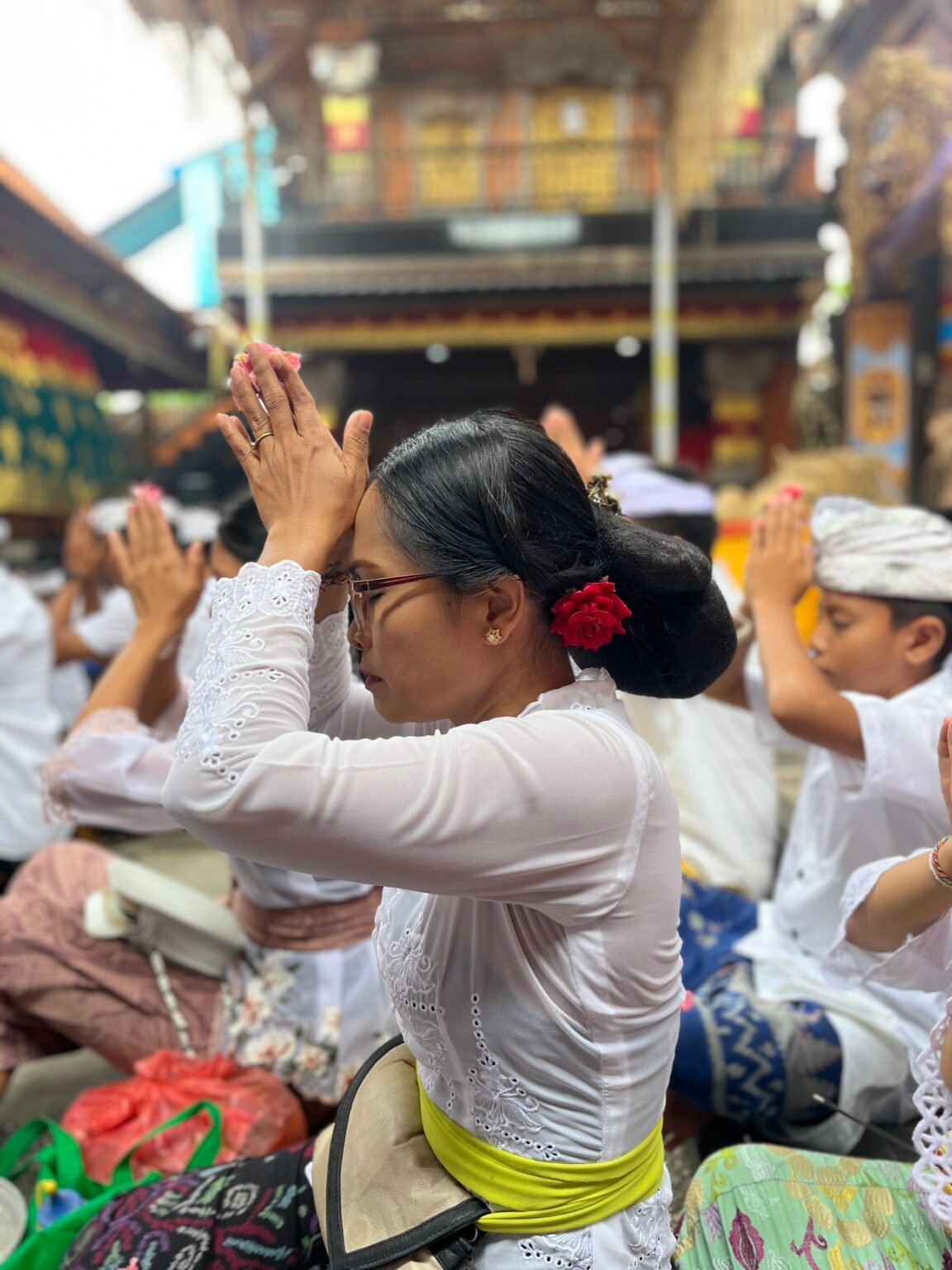
Temples become the heart of community life. Dressed in white and gold ceremonial attire, Balinese families gather to pray, make offerings, and express gratitude for harmony and protection.
The sacred days between
The Galungan period lasts ten days. Each day carries ritual significance, with preparations intensifying as families honor their lineage and reinforce spiritual balance within the household.
It is a time of reconnection — with ancestors, with community, and with one’s inner alignment.
The significance of Kuningan
Kuningan marks the closing of this sacred cycle. It is believed to be the day when ancestral spirits return to the spiritual realm.
Offerings on Kuningan are distinct, often featuring yellow rice (nasi kuning), symbolizing prosperity and gratitude. Prayers are performed before midday, as it is said the spirits depart by noon.
The atmosphere, while still ceremonial, feels softer — contemplative rather than celebratory.
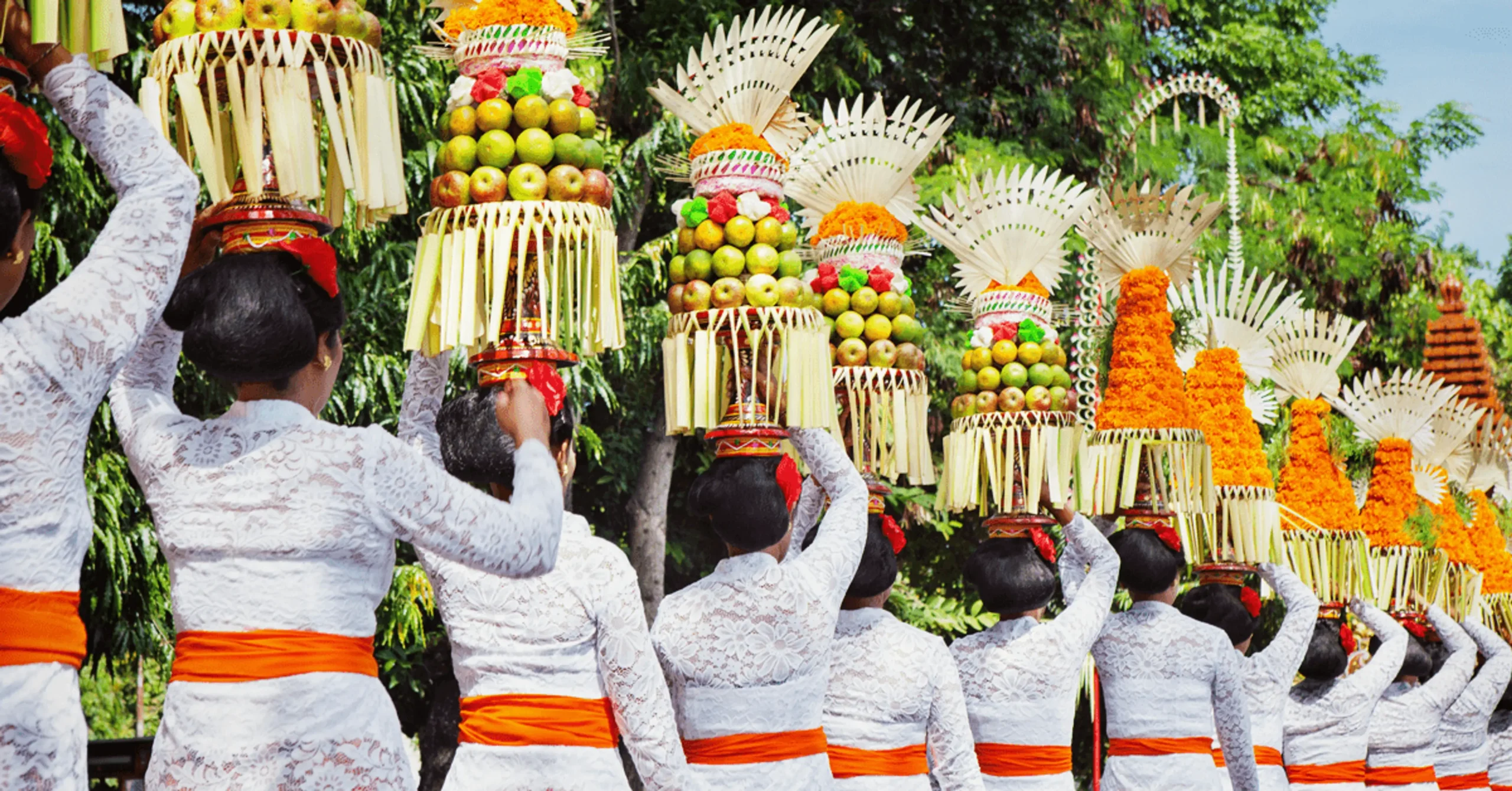
The penjor festival
During the Galungan season, Bali is adorned with the graceful curve of the penjor — tall, intricately decorated bamboo poles symbolising prosperity, gratitude, and the sacred harmony between mountain and sea. While every village raises its own penjor along streets and temple entrances, several festivals elevate this tradition into a remarkable display of artistry.
The Kerobokan Penjor Festival is among the most impressive, where local communities present monumental creations in friendly competition. At the Garuda Wisnu Kencana Cultural Park, elaborate penjor installations are showcased in a grand cultural setting. The Mengenal Penjor Festival offers a more intimate perspective, highlighting craftsmanship and the transmission of ancestral skills. Experiencing these festivals provides a rare opportunity to witness the artistic and spiritual essence of Bali at its most refined.
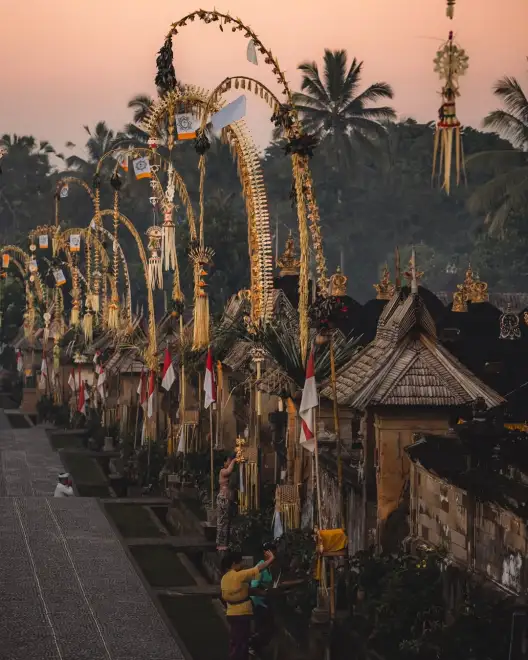
Experiencing Galungan & Kuningan as a Traveler
For visitors, witnessing this period offers a rare and intimate glimpse into the spiritual heartbeat of Bali. It is not a performance, nor a spectacle, but a living tradition embedded in daily life.
Traveling during Galungan and Kuningan invites a slower rhythm. Some businesses may close temporarily as families prioritize ceremonies. Roads may be busier as people return to their home villages. Yet this is precisely when Bali reveals its most authentic self.
Understanding these sacred cycles allows one not merely to observe, but to appreciate the depth of devotion that shapes the island’s identity.